

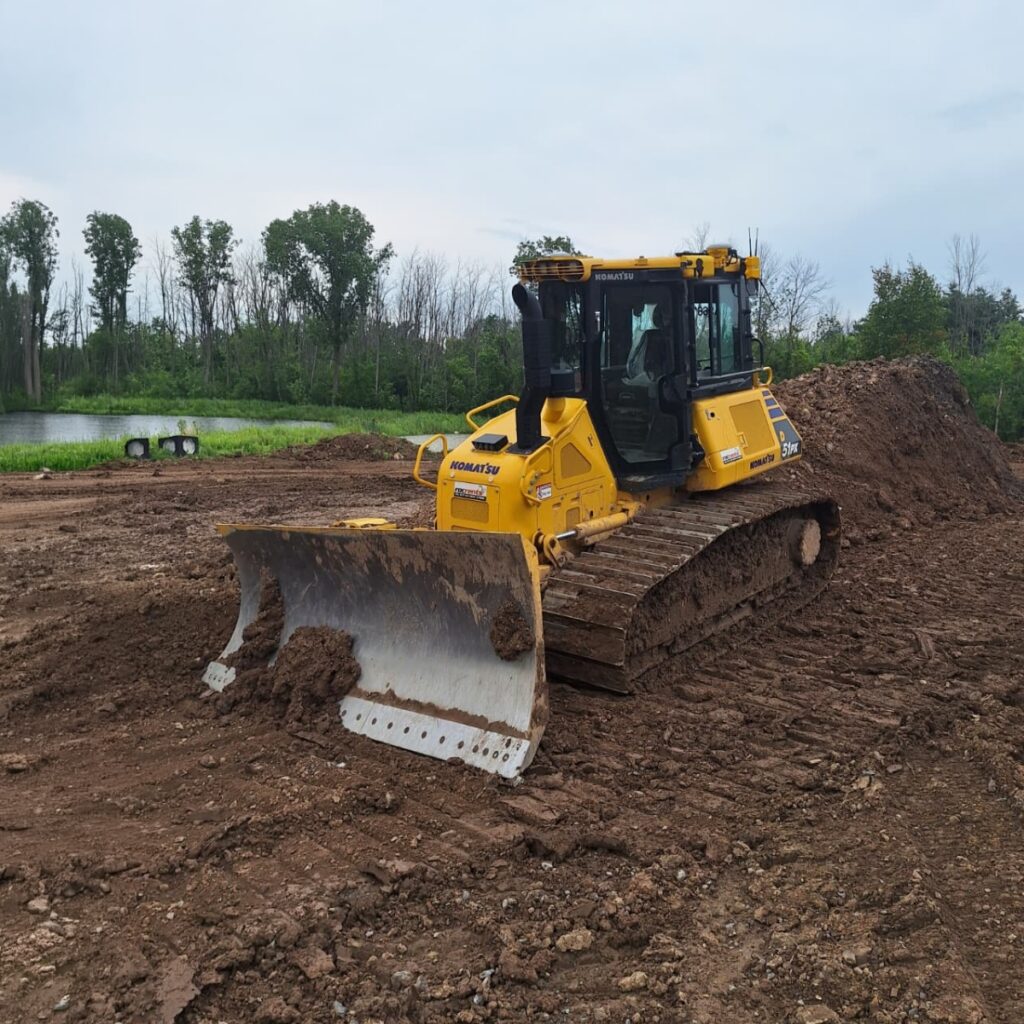
Working a Bulldozer in Wet or Muddy Conditions
TL;DR: Wet or muddy ground reduces a bulldozer’s traction, stability, and grading accuracy, so the machine and the approach both need to change. An LGP (low ground pressure) dozer helps with flotation, but technique matters just as much: lower travel speed, avoid sidehill work, and don’t push the machine past what the ground can support.
Why Wet Ground Changes How a Dozer Performs
Saturated or muddy soil has less bearing capacity than firm ground, which affects a dozer in a few specific ways.
- Reduced traction: tracks can slip on wet, greasy soil, especially on any grade
- Sinking and rutting: soft ground under a full blade load can let the tracks sink, increasing rolling resistance and fuel burn
- Less stable footing: wet ground can shift under the machine’s weight, which matters more on slopes or near unstable edges
- Grading accuracy: it’s harder to hold a consistent grade when the ground itself is inconsistent from one pass to the next
Which RocRents Dozers Are Built for Wet or Soft Ground?
RocRents has a variety of dozers to meet project needs:
- Cat D3K2: Compact and precise for tighter access or small areas
- Cat D5K2/650K Deere: Mid-size, versatile, LGP models available, for many different job sizes and types
- Cat D6N LGP: Large, heavy-duty dozer for serious earthmoving
- Komatsu D39PX & D51PX: Trimble-ready for precision work and large-scale projects
Find the right dozer for your next project, RocRents has a full fleet of well-maintained machines, including Trimble-ready Komatsu models for precise grading.
Operating Tips for Muddy Conditions
- Keep travel speed down. Slower, more deliberate passes reduce the chance of the tracks slipping or the machine sliding
- Avoid working across a slope in wet conditions. Working up and down the grade instead of across it reduces rollover risk on unstable footing
- Don’t spin the tracks. If a track starts slipping, easing off rather than adding power helps avoid digging the machine in further
- Keep the blade load reasonable. An overloaded blade adds resistance that’s harder to manage on soft ground
- Plan access routes ahead of time. Identifying firmer ground for travel paths, rather than repeatedly crossing the softest areas, reduces rutting over the course of a job
- Watch for standing water. Water pooling on the surface is often a sign the ground underneath won’t support normal travel speeds
When Should You Pause Work Due to Ground Conditions?
If a standard dozer is sinking noticeably, struggling for traction on level ground, or leaving deep ruts after a single pass, the ground likely needs to dry out, be built up with fill, or be worked with an LGP machine instead. Continuing to push a standard dozer through ground it can’t support increases the risk of getting stuck or losing stability, and it doesn’t save time in the long run.
Frequently Asked Questions
Does an LGP dozer solve every wet-ground problem?
No. LGP tracks improve flotation and stability, but technique still matters. Travel speed, slope awareness, and blade load all affect how a dozer, LGP or not, handles soft ground.
Can a standard dozer work in mud if I'm careful?
For light, occasional wet conditions, yes, with slower travel speed and lighter blade loads. For consistently wet or saturated ground, an LGP machine is the better fit.
What's the biggest risk of pushing a dozer too hard in mud?
Getting the machine stuck or losing stability on a slope are the two main risks. Both cost more time and money than slowing down or switching to an LGP machine in the first place.
Working a wet or soft site and not sure which dozer fits?
Browse the full fleet at rocrents.com or reach out to our team for a recommendation based on your ground conditions.
Call us: +1 877-617-7368
Or fill out our contact form: https://rocrents.com/contact-us/