

How Mini Excavators Help Speed Up Foundation Preparation
Foundation prep is one of the areas where the right mini excavator makes the biggest difference in schedule. Excavating to grade, cutting footings, and prepping for utilities all move faster with a machine sized correctly for the site and soil.
Why Foundation Work Needs the Right Size Machine
Foundation excavation is precision digging, not bulk removal. The machine needs enough power to move soil efficiently, but not so much bulk that it can’t work in a tight lot or near property lines.
- Lot size and setbacks: many residential lots only leave a narrow strip between the foundation line and the property boundary, which limits machine width.
- Depth to frost line or bearing soil: local frost depth and soil bearing requirements determine how deep the excavation needs to go before footings can be poured.
- Spoil pile placement: the site needs enough room to stage excavated material without blocking the work area or truck access.
Cutting to Grade Accurately
Getting the excavation to the correct depth and slope the first time avoids rework, and that comes down to control more than raw power.
- Bucket sizing: a bucket matched to the trench or footing width keeps cuts clean and reduces hand-grading afterward.
- Laser or grade-checking tools: many crews pair the excavator operator with a grade check to confirm depth as they go.
- Consistent slope: foundation excavations often need a specific slope for drainage, and a smaller, more maneuverable machine makes it easier to hold that line.
Matching Machine Size to the Job
Foundation sites vary widely in scale, and having the right weight class on hand keeps the excavation moving without over- or under-powering the job.
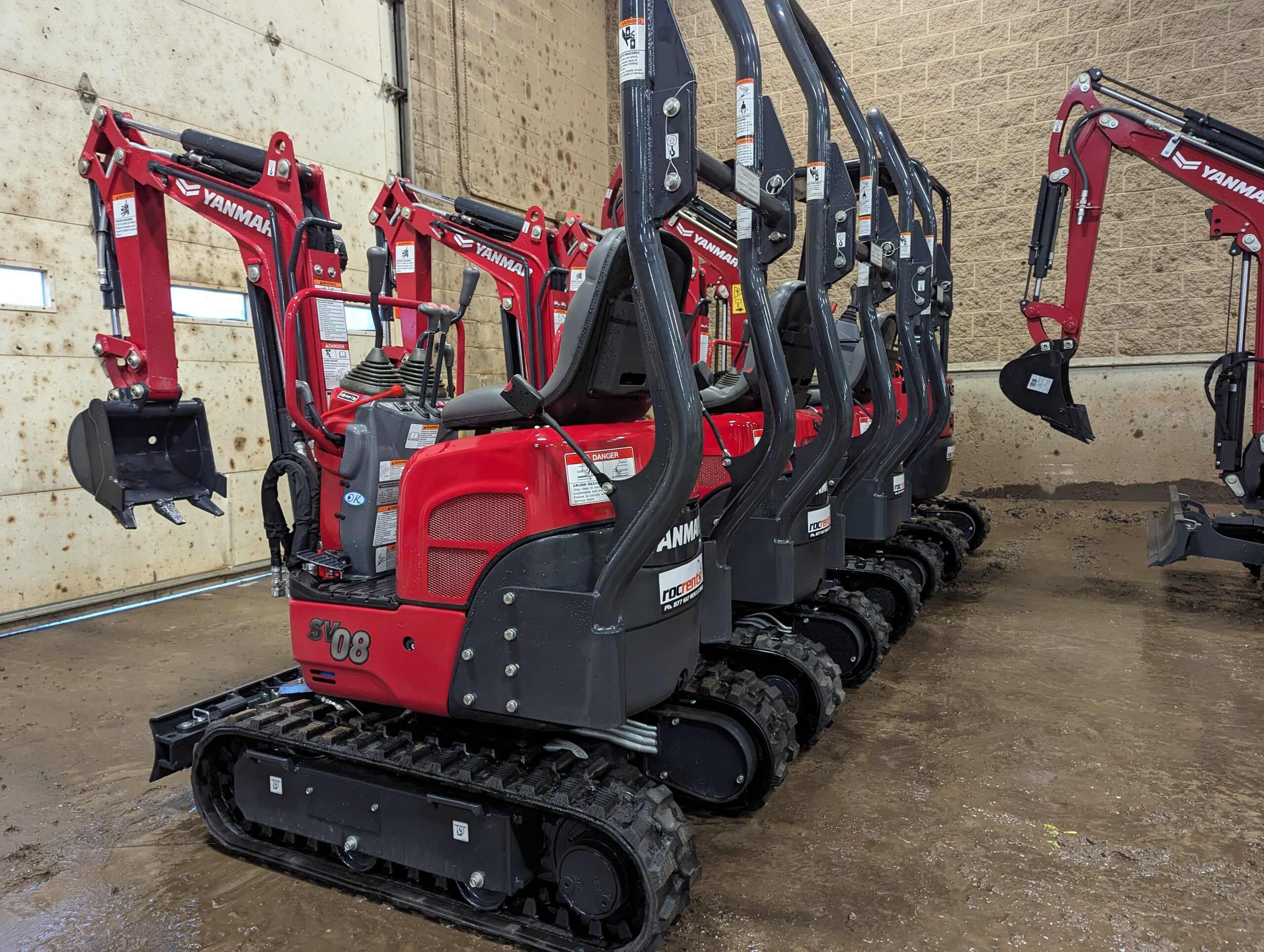
- Tight-access foundations: the Yanmar SV08-1D 0.8 Ton and Yanmar ViO17-A 1.7 Ton fit through openings as narrow as 2 feet 3 inches, making them a strong fit for tight residential foundation work.
- Standard residential footings and mid-depth digging: the Yanmar ViO25-6A 2.5 Ton and Yanmar SV40 4 Ton bring more digging force while still working comfortably on urban and residential lots.
- Larger or deeper foundation excavation: the Yanmar ViO55-6A 5.5 Ton and Yanmar ViO80-7 8 Ton handle heavier excavation loads without sacrificing the zero tail swing precision needed near property lines.
Handling Different Soil Conditions
Foundation sites vary a lot from one lot to the next, and soil conditions affect both machine choice and dig speed.
- Clay and dense soil: this type of ground often needs more breakout force, which usually means stepping up a weight class from what a simple depth calculation would suggest.
- Rocky sites: a hydraulic breaker attachment can clear rock or old foundation material before excavation continues.
- Wet or unstable soil: wider tracks and a lighter footprint reduce the risk of the machine sinking or disturbing surrounding soil near the excavation edge.
Utility Trenching Alongside Foundation Work
Foundation prep often overlaps with utility rough-in, and having one machine handle both saves time on site.
- Narrow trenching buckets keep utility cuts tight and reduce backfill volume.
- An auger attachment can speed up footing holes for piers or post foundations on the same job.
- Switching attachments on one machine is usually faster than bringing in a second piece of equipment for a single task.
Keeping the Schedule Moving
Foundation work sits early in the build sequence, so delays here push back every trade that follows.
- Matching machine size to the job upfront avoids mid-project rental swaps.
- Confirming attachment needs before delivery means the crew isn’t waiting on a second trip to the yard.
- A machine that’s slightly undersized will still get the job done, but it will take longer and add wear to the operator’s day.
Planning a foundation excavation and not sure which machine fits the site? Browse our full mini excavator lineup at rocrents.com or contact our team in Rochester, NY, and we’ll help you match the right mini excavator to your soil, depth, and schedule.