

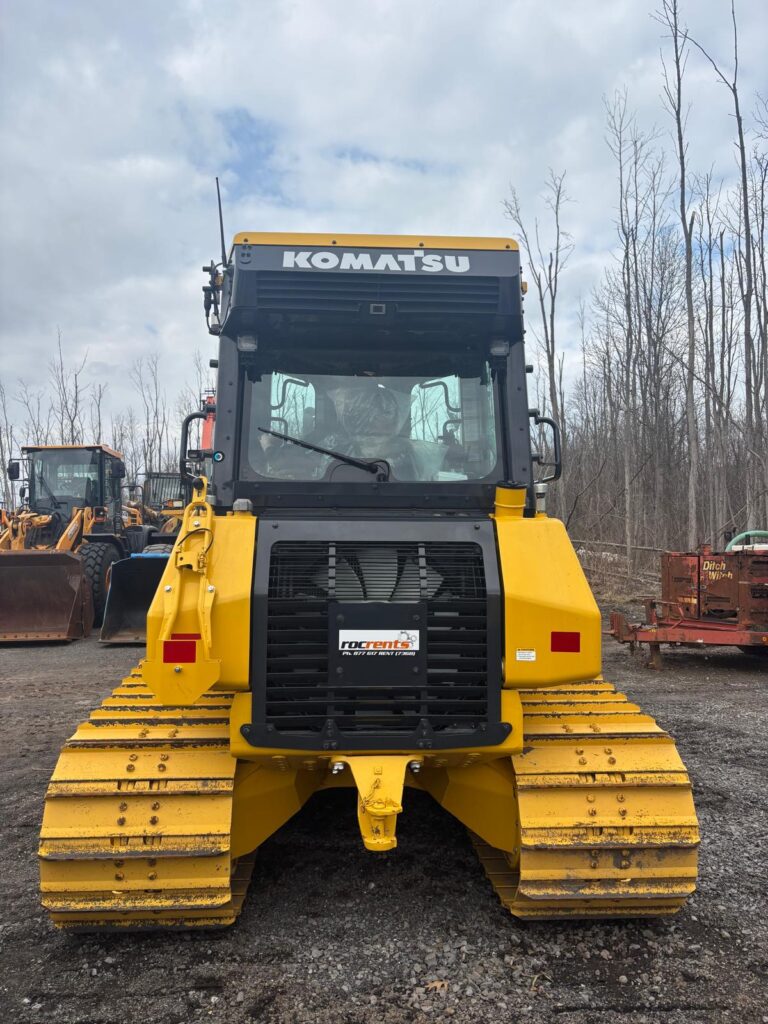
Understanding Dozer Horsepower, Operating Weight & Push Capacity
Dozer performance is mainly determined by horsepower, operating weight, and push capacity. More horsepower increases power, operating weight improves traction, and push capacity determines how much material the machine can move efficiently.
Understanding these three factors helps you choose the right dozer for your project and avoid under- or over-sizing equipment.
What Does Dozer Horsepower Mean?
Horsepower is the engine power that drives the dozer’s ability to push and move material.
Higher horsepower generally means:
- More pushing power
- Faster material movement
- Better performance in heavy soil or clay
- Improved productivity on large jobs
Lower horsepower machines are typically used for:
- Finish grading
- Light earthmoving
- Tight-access work
- Smaller residential projects
Quick Summary
Horsepower controls how much power the dozer has to move material efficiently.
What Is Dozer Operating Weight and Why Does It Matter?
Operating weight is the total weight of the machine while working, including fuel, operator, and attachments.
Heavier dozers generally provide:
- Better traction in tough conditions
- More stability when pushing material
- Improved performance in clay or compact soil
- Stronger ground engagement
Lighter dozers are better for:
- Soft ground where minimal surface impact is needed
- Tight-access jobsites
- Finish grading where precision matters
Quick Summary
Operating weight affects traction, stability, and how effectively a dozer can push material.
What Is Dozer Push Capacity?
Push capacity refers to how much material a dozer can effectively move in a single pass.
It depends on:
- Horsepower
- Machine weight
- Blade size and design
- Ground conditions
- Track type and traction
Higher push capacity means:
- Fewer passes required
- Faster job completion
- More efficient earthmoving
Lower push capacity is still effective for:
- Precision grading
- Small-scale site work
- Finish shaping surfaces
Quick Summary
Push capacity determines how much material a dozer can move efficiently in real working conditions.
How Do Horsepower, Weight, and Push Capacity Work Together?
These three factors are closely connected:
- Horsepower provides the force
- Operating weight provides traction
- Push capacity is the result of both working together
A well-balanced dozer will:
- Move material efficiently
- Maintain traction in difficult conditions
- Deliver consistent grading performance
Quick Summary
Dozer performance is a balance of power, weight, and material-moving ability.
How Do You Choose the Right Dozer Based on These Factors?
When selecting a dozer, consider:
- Light-duty work: lower horsepower, lighter machine
- General construction: balanced horsepower and weight
- Heavy earthmoving: higher horsepower and heavier machine
- Soft ground: LGP configuration for better flotation
Matching these factors to your job improves:
- Efficiency
- Fuel usage
- Productivity
- Finish quality
Quick Summary
The right dozer depends on balancing horsepower, weight, and push capacity to match the job.
Final Takeaway
Horsepower, operating weight, and push capacity are the three core performance factors that define how a dozer works on site. Understanding them helps you choose the right machine for better productivity and lower operating costs.
At RocRents, we help contractors match the right dozer to the right job so every project runs efficiently from start to finish.